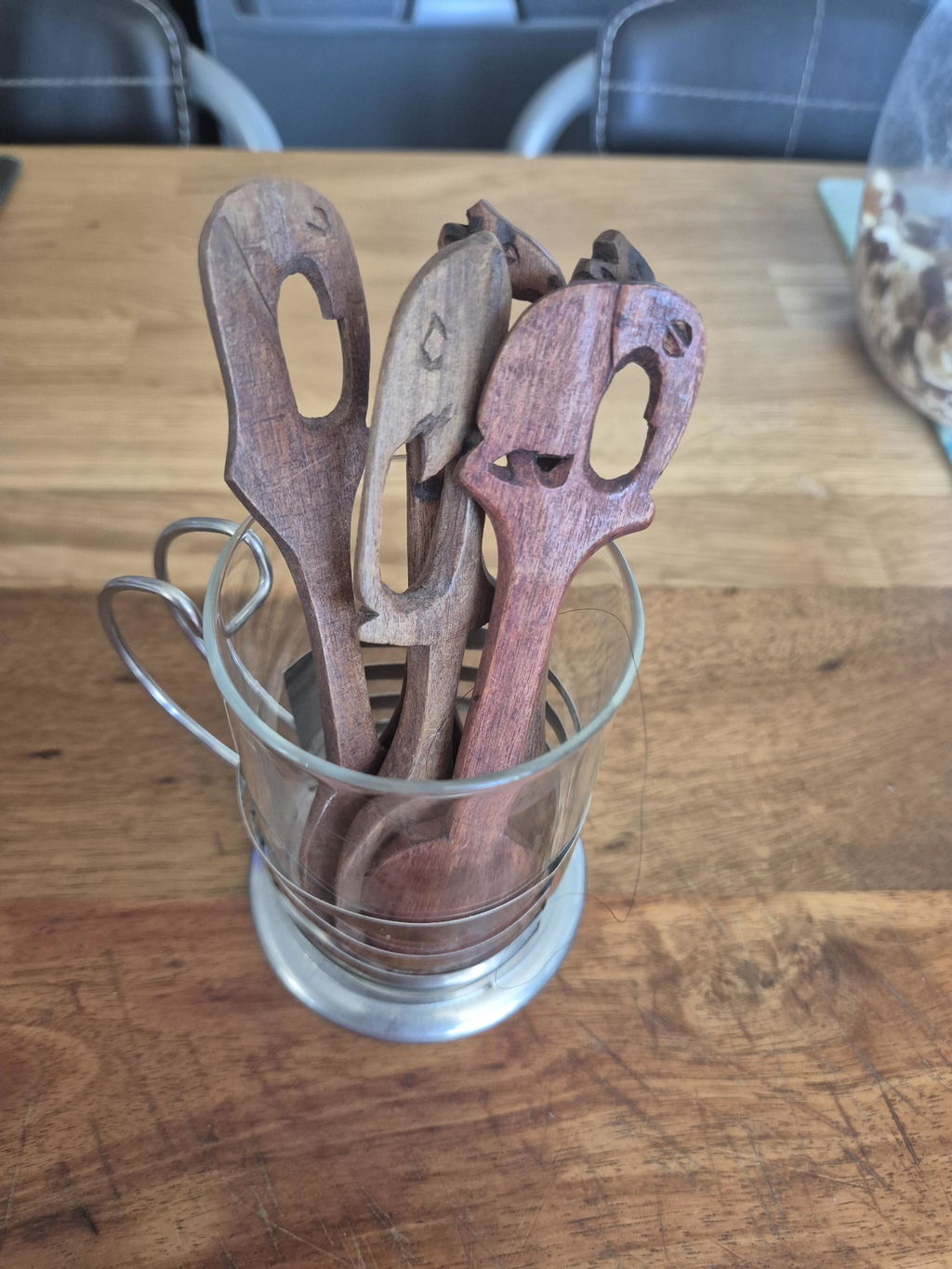
🪵 Handcrafted Wooden Carvings in Senegal: A Fusion of Spirit and Skill
Senegalese wood carving is a deeply expressive art form, often rooted in storytelling, symbolism, and cultural pride. From tribal masks to animal figurines and decorative bowls, each piece is shaped by hand—often using traditional tools and techniques passed down through generations.

🌳 1. Choosing the Wood
- Artisans typically use local hardwoods like mahogany, ebony, or teak for their strength and beauty.
- The wood is selected based on grain, density, and intended design, often sourced sustainably.
✏️ 2. Sketching the Design
- The carver outlines the form directly onto the wood, sometimes inspired by folklore, daily life, or spiritual themes.
- Common motifs include faces, animals, and abstract forms that reflect Senegalese identity.
🔨 3. Carving the Shape
- Using chisels, knives, and mallets, the artisan begins shaping the wood.
- The process is slow and deliberate, with attention to balance, symmetry, and emotional expression.

🧽 4. Smoothing and Detailing
- The sculpture is sanded by hand, often with natural abrasives or fine sandpaper.
- Intricate details—like facial features or textures—are added with small blades or engraving tools.
🖌️ 5. Finishing Touches
- Some pieces are polished with oils or waxes to enhance the wood’s natural sheen.
- Others are painted or stained, especially masks and figurines meant for ceremonial or decorative use.
🖐️ 6. Cultural Signature
- Many artisans sign or tag their work, linking it to a specific village or workshop.
- The final piece often carries a story or symbolic meaning, making it more than just décor—it’s a cultural artifact.

Senegalese carvings are often found in vibrant markets like Soumbédioune and Sandaga in Dakar, where the rhythm of the ocean and city life inspires the art. If you’re curious about specific styles—like fertility figures, ceremonial masks, or wildlife carvings.
About Senegal
Senegal is a coastal country in West Africa, bordered by Mauritania, Mali, Guinea, Guinea-Bissau, and nearly surrounding The Gambia. Its capital, Dakar, sits on the Atlantic coast and serves as a vibrant cultural and economic hub.
French is the official language with Wolof the most widely spoken. The Culture is rich in music, dance, and storytelling—home to the literary movement Negritude and renowned artists like Youssou N'Dour.