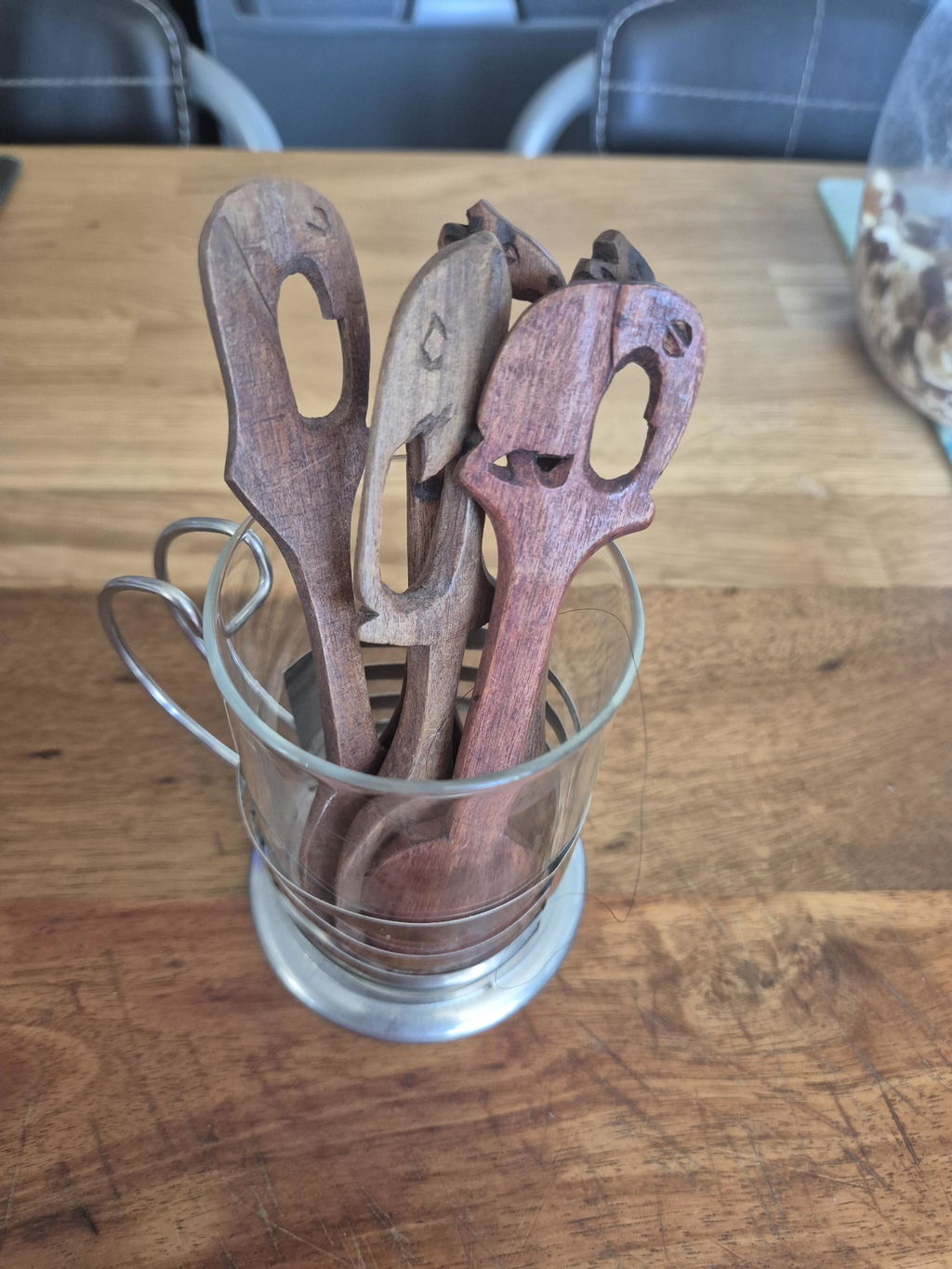
🌳 Crafting an Olivewood Giraffe in Kenya: A Blend of Nature and Heritage
In Kenya, especially among artisan communities like the Kamba tribe, hand-carving wooden giraffes from olivewood is a time-honored tradition that celebrates both wildlife and craftsmanship.
🌳 1. Selecting the Olivewood
- Artisans use fallen branches or pruned wood—never live trees—to preserve sustainability.
- Olivewood is chosen for its distinct grain, density, and warm tones, ideal for detailed carving.
🪓 2. Rough Shaping the Form
- The wood is cut into a block and sketched with the giraffe’s silhouette.
- Using chisels, knives, and mallets, the basic shape is carved—starting with the legs and neck, then refining the body.
🖌️ 3. Detailing and Refinement
- Features like the ears, mane, and facial contours are carefully etched.
- Artisans often use simple hand tools and sandpaper to smooth and define the curves.
🎨 4. Polishing and Finishing
- The sculpture is wet-sanded to bring out the natural sheen of the olivewood.
- Some giraffes are hand-painted with realistic or stylized patterns, while others are left natural to showcase the wood’s beauty.
🖐️ 5. Final Touches
- The base may be added for stability, or the giraffe may be carved from a single solid piece.
- Each piece is inspected, and many are signed or tagged by the artisan, marking its origin and authenticity.
These are not only carvings - they are cultural ambassadors. Below is a photo of Anastasia, who runs a business carving these beautiful giraffes, having learned as a child from her father and then taking over many years ago when her own husband passed away.

About Kenya
Kenya is a vibrant country located in East Africa, bordered by Tanzania, Uganda, South Sudan, Ethiopia, Somalia, and the Indian Ocean. Its capital city is Nairobi, a bustling hub of politics, commerce, and culture.
Home to lions, elephants, giraffes, and rhinos—protected in over 40 national parks and reserves.
Kenya’s motto, Harambee (“pulling together”), reflects its spirit of unity and resilience.