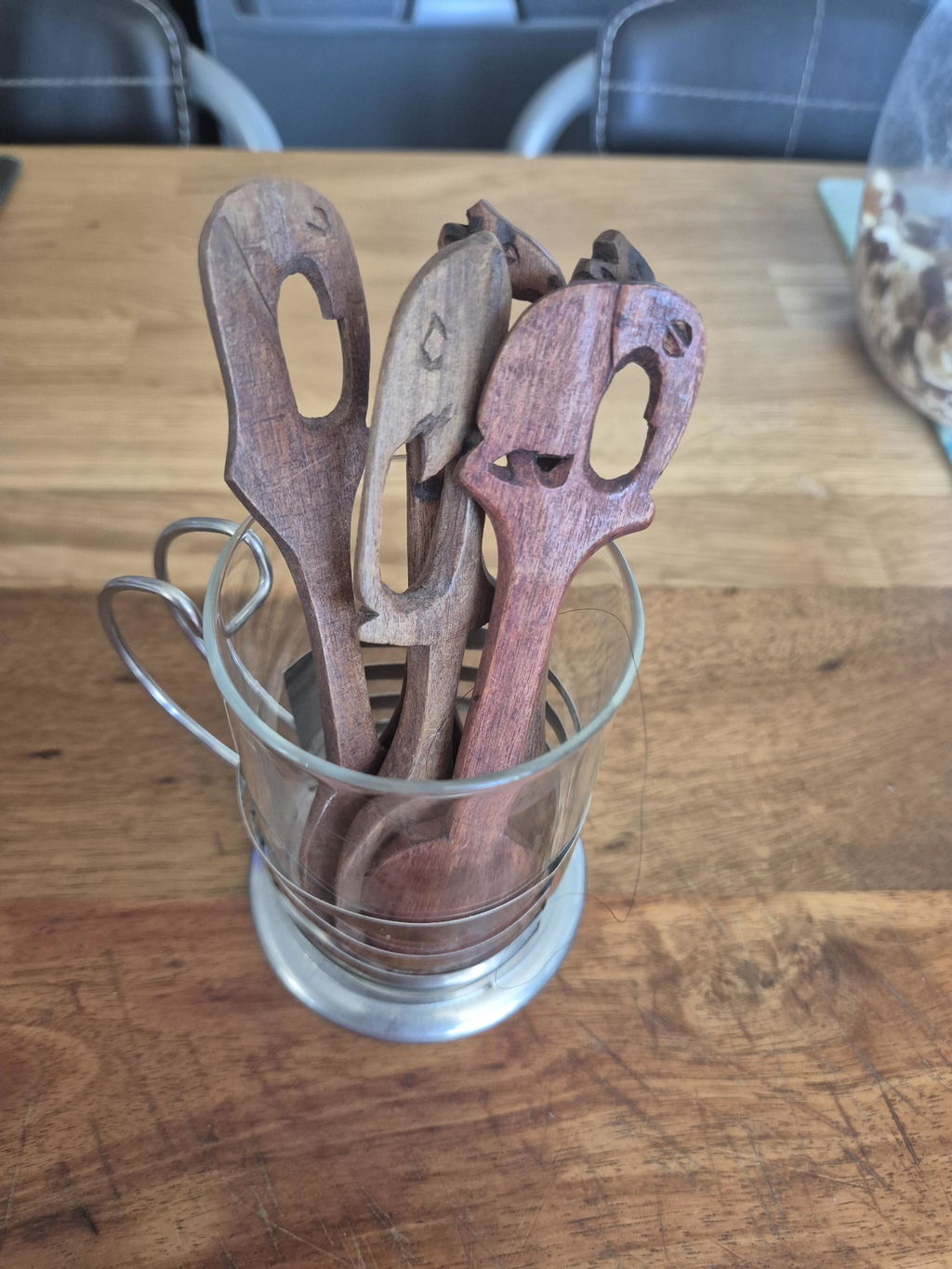
🌳 Crafting an Olivewood Bowl: A Step-by-Step Journey
Olivewood is prized not only for its rich grain and earthy aroma but also for its durability and character. Turning it into a bowl blends tradition, craftsmanship, and patience.
The process is similar for creating other wild olivewood designs.
🪵 1. Selecting the Wood
- Harvested from pruned branches or fallen trees—never from live, healthy trunks.
- Chosen pieces are seasoned for months or even years to reduce cracking.
🔧 2. Rough Shaping
- The dried wood blank is mounted on a lathe.
- It’s turned into a rough bowl shape using gouges and chisels, gradually revealing the wood’s unique patterns.

🌀 3. Drying Again
- The rough bowl is often re-dried to stabilize its shape.
- This can take several more weeks to prevent warping.
✨ 4. Final Turning
- Back on the lathe, the bowl is refined into its final dimensions.
- Detail tools carve out the rim, base, and contours with precision.
🛠️ 5. Sanding & Smoothing
- Sanded progressively from coarse to ultra-fine grits.
- The goal: a silky, tactile finish that highlights the grain’s depth.
🌿 6. Oiling or Waxing
- Olive oil or food-safe wax is applied to seal and enhance the wood’s natural sheen.
- Some artisans buff it to a soft glow, others prefer a matte, rustic texture.
🖐️ 7. Final Touches
- Any imperfections are addressed, and the bowl is inspected for balance and finish.
- Often signed or stamped by the maker—a mark of pride.

Every olivewood bowl is like a thumbprint: distinct, storied, and quietly elegant.
About Kenya
Kenya is a vibrant country located in East Africa, bordered by Tanzania, Uganda, South Sudan, Ethiopia, Somalia, and the Indian Ocean. Its capital city is Nairobi, a bustling hub of politics, commerce, and culture.
Home to lions, elephants, giraffes, and rhinos—protected in over 40 national parks and reserves.
Kenya’s motto, Harambee (“pulling together”), reflects its spirit of unity and resilience.